Is The SaaS Stock Sell Off Reaching Bottom?
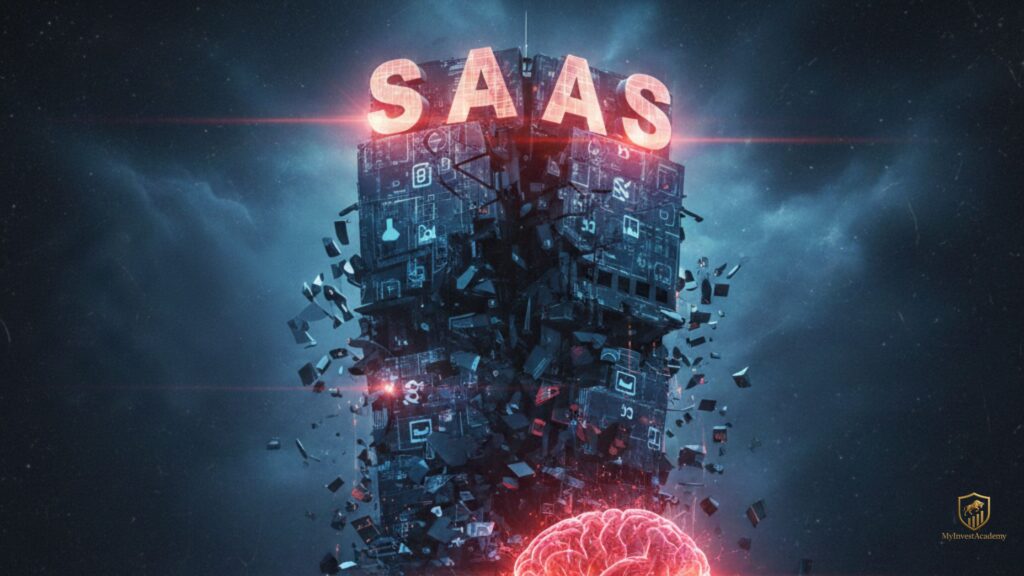
NEW YORK, Feb. 21, 2026 – The tech market is currently experiencing a historic reckoning, driven by the rapid and disruptive evolution of artificial intelligence. What started as a minor pullback has evolved into a full-blown “SaaS-pocalypse,” wiping out hundreds of billions in software market value in a matter of weeks. As Wall Street panics over the obsolescence of traditional software models, investors are forced to ask: Is this the end of the software sector as we know it, or just a brutal, necessary recalibration?
The AI Threat: Are Software Stocks Becoming Redundant?
The tech market in early 2026 is experiencing a seismic shift, driven by the rapid evolution of artificial intelligence. What started as a pullback has evolved into a full-blown “SaaS-pocalypse.” The primary catalyst for this massive sell-off was the release of highly capable “agentic AI” tools, such as Anthropic’s Claude Cowork and Claude Code Security.
Investors are realizing that AI is transitioning from a helpful background copilot to a direct substitute for human labor. Because the traditional Software-as-a-Service (SaaS) business model is heavily dependent on per-seat licensing – where revenue scales with the number of human employees using the software – the market is terrified. If autonomous AI agents can do the work of entire departments, the demand for dozens of expensive software seats could plummet, leading to fears that vast swathes of the software sector will be rendered redundant.
2026's Biggest SaaS Casualties: YTD Performance Comparison
The recent sell-off has been brutal and largely indiscriminate, wiping out massive amounts of market value. Here is a look at some of the hardest-hit SaaS stocks based on their Year-To-Date (YTD) drops in early 2026:
| Company | Ticker | Approximate YTD Drop | Core Software Category |
| Atlassian | TEAM | -50% | Project Management & Collaboration |
| Intapp | INTA | -49% | Financial & Legal Industry Cloud |
| AppLovin | APP | -45% | Mobile App Marketing & Monetization |
| HubSpot | HUBS | -42% | Inbound Marketing & Sales |
| Intuit | INTU | -39% | Financial & Tax Preparation |
| Salesforce | CRM | -30% | Customer Relationship Management |
| JFrog | FROG | -24% | Software Supply Chain & Security |
Some SaaS Stocks Are Permanently Damaged
Not every software company will bounce back from this crash. The reality is that the market is accurately pricing in the obsolescence of weaker business models. SaaS companies that essentially function as a simple user interface (UI) layered on top of a basic database face a bleak future.
If an AI agent can autonomously execute a workflow that previously required a specialized, rigid software subscription, that legacy software will quickly lose its value. Vendors that are unable or unwilling to pivot away from strict seat-based pricing models – or those that lack proprietary data to train their own AI – will see their growth stall permanently. For these companies, the current lower valuations are not a temporary dip, but a permanent recalibration of their worth.
Not All Doom and Gloom: Why Quality SaaS Will Survive AI
Despite the panic, the sell-off has dragged down high-quality SaaS stocks alongside the doomed ones. AI will undoubtedly disrupt the sector, but it will not render the strongest players worthless. Here is why the top-tier software companies will weather the storm.
Deep Data Integration and Moats
Building a quick AI prototype is easy, but deploying production-ready, highly secure enterprise software is incredibly difficult. Incumbents like ServiceNow and Salesforce are deeply embedded in the daily workflows and historical data of their enterprise clients. They serve as the critical “system of record.” The switching costs are astronomically high, and large enterprises are highly unlikely to abandon their secure, integrated data ecosystems for unproven AI alternatives overnight.
Shift to Consumption-Based Pricing
The death of “per-seat” pricing does not mean the end of SaaS revenue. Forward-thinking software companies are actively transitioning to consumption-based or outcome-based pricing models. Instead of charging per employee, they are shifting to charging based on API calls made, computing power used, or the volume of tasks completed by AI agents within their platforms. This strategic pivot allows them to directly monetize the AI-driven productivity boom.
Accelerating Forward Commitments (RPO)
f you look past the volatile stock charts and examine actual corporate balance sheets, the fundamentals for many companies remain completely intact. For instance, while Atlassian’s stock has plummeted, its Remaining Performance Obligations (RPO) – a forward-looking metric that tracks future financial commitments from clients – actually grew by over 40% in recent quarters. Clients are still signing long-term contracts, proving that real-world enterprise demand is not evaporating as fast as Wall Street assumes.
Myth of Public SaaS Safety vs. Diversified Mavericks
It is a dangerous misconception that simply being a publicly traded software company guarantees survival. The reality is that even well-capitalized public SaaS stocks will take massive hits, and many pure-play software vendors will ultimately become obsolete as AI natively replicates their core offerings.
“The only true safe havens in this market are the diversified ‘big mavericks’—the massive tech conglomerates that don’t just sell software, but own the underlying AI infrastructure.”
These hyperscalers (like Microsoft, Amazon, and Google) benefit directly from the surge in AI computing demand. Because their revenue streams are highly diversified, they possess the immense free cash flow required to aggressively adapt, acquire AI startups, and dominate the new landscape, leaving isolated, pure-play public SaaS companies vulnerable to extinction.
Conclusion
The great SaaS sell-off of 2026 is not a temporary market glitch, but a permanent structural shift in how enterprise value is created and captured. While the age of the bloated, per-seat software subscription is rapidly coming to an end, the underlying need for secure, integrated, and outcome-driven enterprise solutions remains. Investors must tread carefully: the graveyard of obsolete software will be vast, but the diversified giants and specialized, data-rich survivors will eventually command the lion’s share of the market’s future wealth.
References
- Share prices and market data – NASDAQ