Energy Stocks Crush S&P 500 in 2026:
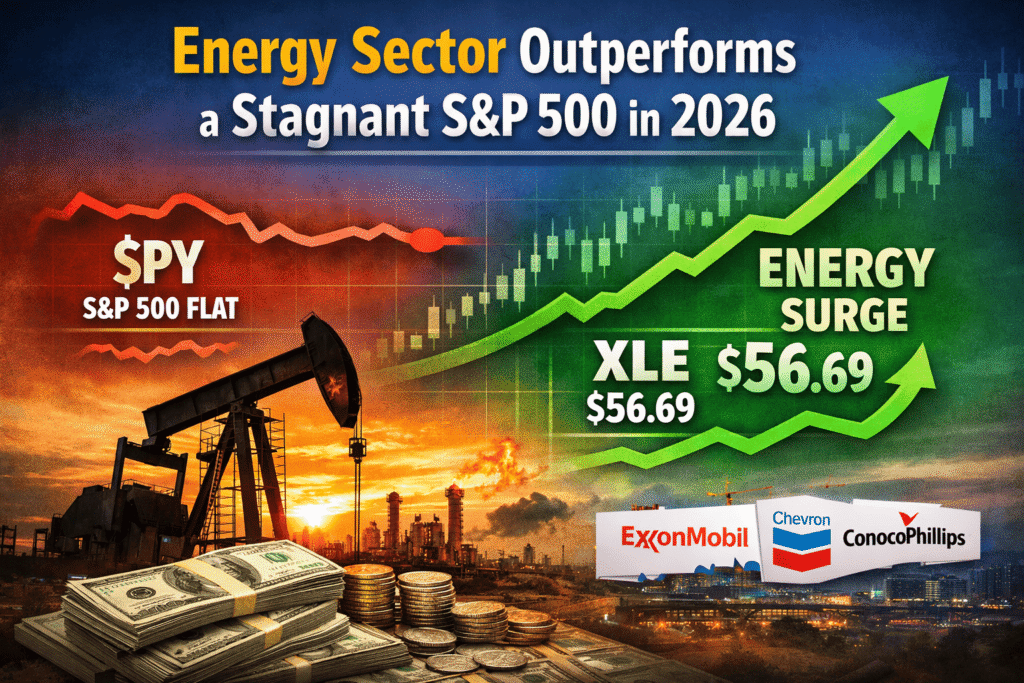
The S&P 500 remains flat early in 2026. In contrast, the energy sector is delivering significant gains.
The SPDR S&P 500 ETF Trust (SPY) is essentially unchanged year-to-date. The Energy Select Sector SPDR ETF (XLE) is nearing its 52-week high. Currently trading at $56.69, XLE is up 52% from its 52-week low of $37.24. This performance gap marks a distinct sector rotation from broad market indexes to concentrated energy holdings.
Concentration vs. Diversification
SPY tracks 500 companies across all major industries. That broad market exposure drove steady gains in recent years but is currently lagging.
XLE is heavily concentrated with just 22 holdings. Three companies dominate the fund:
Exxon Mobil: 22%
Chevron: 19%
ConocoPhillips: 8%
This concentration creates elevated volatility, which amplifies gains during periods of sector strength. Right now, capital is flowing directly into these top-weighted names.
Consistent Gains Amid Falling Crude
This momentum builds on previous years. XLE returned 19% in 2024 and gained 7.8% in 2025. The 2025 increase occurred despite a 20% drop in crude oil prices. This indicates that major energy equities can perform well independent of underlying commodity price spikes.
Geopolitical developments in early March 2026 accelerated the rally. Renewed Middle East tensions drove WTI and Brent crude up 7% to 8% within days, with Brent briefly spiking 13%. While energy producers remain highly profitable at lower price levels, these global events reinforce the sector’s utility as a hedge against geopolitical risk.
Valuation and Cash Flow Fundamentals
Strong fundamentals support the current price action. Energy companies are generating historically high levels of free cash flow. XLE offers a 3.12% dividend yield, significantly outpacing the technology sector. Energy stocks also maintain an attractive price-to-earnings ratio relative to the broader S&P 500 index.
Despite representing only 3.5% of the S&P 500’s total weight, the energy sector is currently a primary driver of market performance.
Capital flows point to a sustained rotation. Institutional investors began shifting capital from AI-focused technology stocks into defensive and energy equities in late 2025. Backed by resilient cash flows and attractive yields, the energy sector continues to capture market share.